Who is behind this
Why this site exists
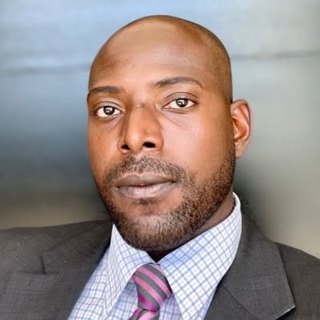
Finley Delouche
Cybersecurity major at Columbus State University, with a research interest in AI. He built this site and pays for it. The views on this page are his, not the site’s editorial position.
What this site is for
Most advice about misinformation amounts to be more skeptical. That is not a method, and being suspicious of everything is only marginally better than believing everything — it costs more effort and it ends in the same place, which is not knowing.
So this site teaches a procedure instead. Four moves, about thirty seconds, usable on a phone while the post is still on the screen. Then twenty-four real situations to practice on, with your confidence recorded next to your accuracy, because the gap between those two is usually the more useful number. Then the patterns that keep reappearing, and the twelve things people get wrong about misinformation itself.
Every number here names a source, a date and a sample size. Nothing on this site asks you to take its word for anything, which would be a strange thing for a site about verification to do.
It is free, there are no ads, there is no account, and nothing about individual visitors is tracked. How it is funded is a page of its own.
Where it came from
This started as coursework. RIVR 1101 at Columbus State assigns a project aimed at the local community, and the subject — misinformation, disinformation and malinformation — came with the assignment rather than being chosen.
That team project is being done with classmates, separately. This site is a second, independent build, kept deliberately apart from it: no graded coursework and no classmates’ work appears here.
The assignment asked for something local. The problem is not local. So the work continued past the requirement, which is why the site is in ten languages and built so that adding an eleventh needs no rebuild.
The topic turned out to be a good one to be handed. When people cannot agree on what is true, very little else gets solved — which makes this the problem sitting underneath a lot of the others.
The larger project
Kestrel Exams is the project this site belongs to: free study material and guides, published at kestrelexams.com, aimed at anyone who wants to learn a subject and does not want to pay for the privilege. MediaBias.fyi is one piece of it, and the piece that had to come first.
Its origin is not complicated. The study material was built for one student who needed it, shared with two others, and worked for them too. Everything since has been an attempt to scale that to more than three people.
The reasoning behind it is worth stating plainly, because it explains why a media literacy site and a study-guide site are the same project. Nearly every large problem that ever got smaller did so because enough people understood it well enough to work on it. Disease is the obvious case. Hunger is another, and it is now far less a question of whether enough food exists than of where it ends up. None of those improved because they were discussed. They improved because enough people knew enough to build something.
We tend to spend most of our attention describing a problem and very little on the solution. Take the energy footprint of data centers. “Stop building them” is not a plan, because demand will not fall while people keep using the things they power. The plan is better siting, better cooling, and a real move to renewable supply — and that takes more engineers, more scientists, more people who can do the work.
More people who can do the work is an education problem. That is the thesis.
On AI, and being honest about it
I use AI to build this. Specifically, I use frontier models from Anthropic and OpenAI to research, draft and cross-check.
I am telling you that on the page where it matters most, because a site about misinformation that hid its own method would deserve the criticism it got.
The usual objection is hallucination, and it is a fair one. Frontier models invent far less than the models most people formed their opinion on two years ago. They still do it, and they do it worst on exactly the things this site cares about: specific figures, precise attributions, and citations that look correct at a glance. So every factual claim here is checked against a named, dated source before it is published. The AI speeds up the work. It does not get the final say.
That gap is the second half of the problem I want to work on. Bad actors using AI to manufacture false content get most of the attention. The larger group is people who are not lying at all. They ask a model a question, get a confident answer, and pass it along. They were never shown how to use the tool. That is fixable, and it is teachable, and it is a large part of why this site exists.
On AI and people who make things
A personal view, and one the site does not require anyone to share.
The argument that AI will take work from people who make things by hand is not irrational, and it deserves better than being waved away. But the technology is here and it is not leaving, and the useful question is what to do about that.
The suggestion is to use it for the parts of the job nobody wanted anyway, and to let it put the actual work in front of more people. Use it to build the site that shows the photographs. There are eight billion of us and already more media than anyone could watch; standing out was hard long before any of this.
When a piece is finished, the question a viewer actually asks is whether it is any good. That was true before, and it is still true.
What this is trying to be
The goal is not for anyone to trust this site. It is for the reader to leave with a procedure they can run without it — on a page this site has never seen, in a language it does not publish in, years after it stops being updated.
A media literacy site that made itself necessary would have failed at the thing it was for. The measure of whether this worked is whether the next questionable post gets checked, by someone who no longer needs to be told to.